
93: The Promise That Couldn't Deliver
Dual Vlog Camera: Front & Back
Get it on Playstore Get it on the App Store
Dual Vlog Camera by GoNext represents an ambitious but fundamentally flawed attempt to solve a genuinely appealing creative problem: recording simultaneously from a smartphone's front and rear cameras. The concept is compelling for vloggers, travelers, and content creators who want to capture their own reactions while documenting the world in front of them. With over one hundred thousand downloads, the idea clearly resonates. However, the two point seven star rating, exceptionally low for a utility app with this download volume, signals that execution has failed to match ambition.
The app enters a category where hardware limitations often defeat software aspirations. Simultaneous dual-camera recording requires Android's multi-camera API support, manufacturer exposure of camera streams, and sufficient processing power to encode two video feeds concurrently. Many devices, particularly mid-range and budget models, simply cannot deliver this capability regardless of the app's quality. The developer's challenge is not merely building a good app but building one that works across a fragmented hardware ecosystem.
Core Capabilities
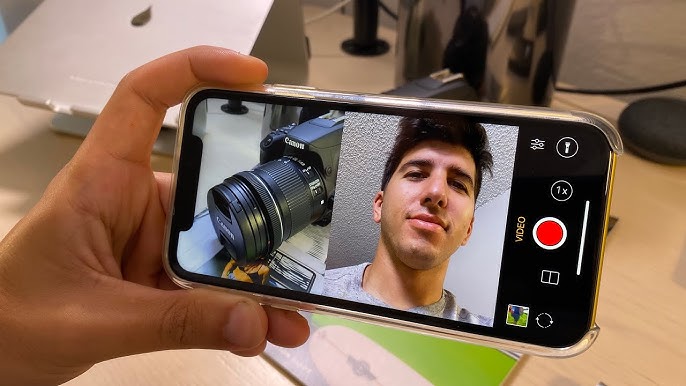
The app attempts to enable simultaneous front and rear camera recording with several layout options. Users can select split-screen mode, where both camera feeds appear side by side, or picture-in-picture mode, where the front camera feed floats as an overlay on the rear camera view. The interface allows switching between these layouts and adjusting the position and size of the overlay window.
Basic recording controls include start, stop, and resolution selection. The app supports photo capture alongside video recording, allowing users to snap stills from either camera during active sessions. A simple file manager within the app organizes recorded content by date, with options to share directly to social media platforms.
The app targets vloggers specifically, marketing itself as a tool for reaction videos, travel documentation, and dual-perspective storytelling. The concept of capturing both the subject and the scene simultaneously is genuinely valuable for content formats where the creator's presence matters as much as the environment.
What It Does Well
The app's core concept is genuinely appealing. For vloggers who have historically needed two devices or complex post-production to achieve dual-perspective content, a single-app solution would represent meaningful workflow simplification. The marketing correctly identifies a real use case that existing camera apps rarely address.
The interface is straightforward and visually clean. Layout selection, recording controls, and file management are accessible without extensive tutorial or technical knowledge. For users whose devices do support dual-camera recording, the learning curve is minimal.
The app is lightweight in terms of storage footprint, making it accessible to users with limited device capacity. This is particularly relevant for the budget device users who constitute a significant portion of the target market.
Limitations and Concerns
The most critical limitation is hardware compatibility. Android's multi-camera API, introduced in Android 9 and improved in Android 11, requires both operating system support and manufacturer implementation. Many devices, even those running recent Android versions, do not expose both camera streams simultaneously to third-party applications. Samsung's Director's View and Motorola's Dual Capture work because manufacturers optimize specifically for their own hardware. A generic third-party app cannot replicate this level of integration. The result is that the app fails to function on a significant portion of devices, producing black screens, crashes, or single-camera fallback behavior that defeats the entire purpose.
The two point seven star rating reflects this fundamental failure. User reviews consistently report that the app does not work as advertised on their devices, with common complaints including inability to activate both cameras, app crashes during recording, frozen preview screens, and corrupted output files. For an app whose entire value proposition depends on dual-camera functionality, failure to deliver this core feature is catastrophic.
Advertising is intrusive and poorly timed. Full-screen advertisements appear during setup, between recording attempts, and during file playback. For users already frustrated by technical failures, these interruptions compound the negative experience. The ad frequency suggests aggressive monetization that prioritizes revenue over user retention.
Video quality on devices where the app does function is reportedly substandard. Resolution is often limited to 720p or lower, frame rates drop during dual recording, and audio synchronization between the two streams is frequently misaligned. The output files, while technically containing both perspectives, lack the polish expected for content creation.
The developer, GoNext, has limited public presence and no established track record in camera or video applications. Support responsiveness is minimal, with users reporting unanswered queries and no visible roadmap for addressing compatibility issues. The app appears to be a low-maintenance release rather than an actively developed product.
Storage management is problematic. Recorded files consume significant space, and the app's internal file manager lacks bulk deletion or cloud backup integration. Users report running out of storage after minimal usage, with no guidance on managing file lifecycle.
Performance on devices that do support dual recording is poor. Thermal throttling is common during extended sessions, battery drain is severe, and the app frequently becomes unresponsive when switching between camera modes. These issues suggest insufficient optimization for the computational demands of dual-stream encoding.
Competitive Positioning
The dual-camera recording category is small and technically challenging. Samsung's built-in Director's View on Galaxy devices offers superior integration, higher quality, and reliable performance, but is limited to Samsung hardware. Motorola's Dual Capture provides similar functionality on select models. FiLMiC DoubleTake offers professional-grade dual recording with manual controls and better compatibility, but requires payment for advanced features and has its own device limitations.
Against these alternatives, GoNext's app wins only on being free and universally available on the Play Store. It loses on compatibility, quality, stability, and support. For users with Samsung or Motorola devices, built-in solutions are objectively superior. For users on other hardware, Open Camera offers limited dual-camera support on compatible devices with the advantage of being open-source and privacy-respecting, though its dual functionality is similarly hardware-dependent.
The fundamental challenge is that no third-party app can overcome hardware limitations that manufacturers deliberately do not expose. GoNext's app promises a universal solution to a problem that is inherently not universal.
Target Audience
The app theoretically targets vloggers, travelers, and content creators seeking dual-perspective recording. In practice, its actual user base appears to be curious downloaders attracted by the concept who quickly abandon the app after discovering it does not work on their devices. The high download count relative to the extremely low review count suggests significant churn, with most users uninstalling before engaging enough to leave feedback.
It is not recommended for professional content creators who need reliable, high-quality output. Users with Samsung or Motorola devices should use built-in dual-camera features instead. Casual users seeking to experiment with dual recording should verify hardware compatibility before investing time in configuration.
Verdict
Dual Vlog Camera by GoNext is a cautionary tale about the gap between concept and execution. The idea is sound, the market need is real, and the download numbers prove user interest. But the two point seven star rating tells the true story: an app that promises a feature most devices cannot deliver, wrapped in aggressive advertising and minimal support.
The core problem is not poor coding or bad design. It is a fundamental mismatch between what the app promises and what Android hardware ecosystem allows. Until Google mandates universal multi-camera API support and manufacturers consistently expose dual streams to third-party developers, apps like this will continue to disappoint users regardless of developer intent.
For users whose devices happen to support the functionality, the app provides basic dual recording with significant quality and stability compromises. For everyone else, and that appears to be the majority, it is a source of frustration and wasted time.
Rating: Three out of ten. A conceptually appealing tool that fails to deliver its core promise for most users, undermined by hardware fragmentation, aggressive advertising, and inadequate quality control. Not recommended except for users who have verified their specific device supports dual-camera recording and are willing to accept substandard output quality.