
23: Superb Outcomes Buried Under Forgiveness Ads
Remini - AI Photo Enhancer
Get it on Playstore Get it on the App Store
In the modern age of technology, pictures are our recourse method of holding onto memories, recording moments, and sharing experiences with the people we love. Not all photographs, though, turn out so well. Older pictures of families turn yellow and degrade over time. Low-light gives grainy, blurry images. Shots taken afield lack the specificity we wished to achieve. Minor movement of the camera causes blur that ruins otherwise flawless moments.
For a long time, to fix poor-quality photos required professional photo editing skills, expensive software like Adobe Photoshop, and endless hours of monotonous labor by hand. Even then, results were limited by how good the initial photo was—you really couldn't add detail which wasn't already there.
Artificial intelligence has transformed this reality. Modern AI algorithms that have been trained with millions of high-quality images can analyze low-resolution or degraded photos and rebuild lost information, sharpen unfocused features, remove noise, enhance colors, and essentially "imagine" what a higher-resolution version of the image would look like. This technology was once only available at research institutes and professional studios but is now at hand through smartphone applications that edit images in seconds.
Remini - AI Photo Enhancer is perhaps the most popular instance of this kind of technology, boasting a whopping 500+ million downloads and 5.5 million reviews with an average 4.5-star rating. The app promises to take old, blurry, or low-quality photos and turn them into clear, crisp, high-definition photos using the best AI upgrade. But does it deliver its promise, and better yet, how much does it really cost?
What is Remini?
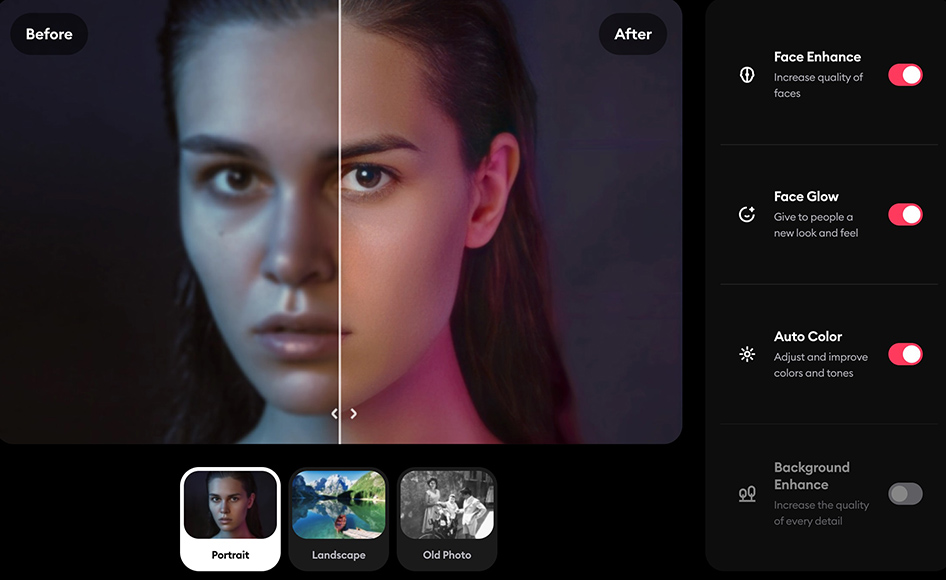
Remini is a machine learning-based photo enhancement app that utilizes artificial intelligence to improve picture quality. Remini scans uploaded photos, identifies quality issues like blurriness, bad resolution, graininess, or low light, and then employs high-end AI processing to sharpen text, restore features, improve clarity, and create noticeably better versions.
The technology performs best on portraits, where the AI has undergone extensive training in face features and can restore skin texture, eye clarity, and face shape with incredible accuracy. The app is also able to handle landscapes, objects, vintage photos, and numerous other types of images to different extents.
The Enhancement Quality: Where Remini Thrives
As much as what the actual outcome of the improvement is, Remini actually does provide fantastic performance that justifies its hugeness in popularity. The AI processing delivers dramatic improvement that seems to look almost magical, especially when correcting heavily degraded source material.
Portrait Restoration: Remini excels at face restoration, transforming fuzzy or pixelated faces into clear, detailed portraits. The AI restores facial features with amazing accuracy, defining eyes, smoothing skin texture naturally, and detailing overall facial shape. Old family portraits from decades gone by can be restored to stunning clarity, revealing details hidden in the original.
Old Photo Restoration: Dull, discolored, and low-resolution old photos are given new life. The AI not only sharpens what is already there—it learns patterns from millions of images it has been trained on and fills in gaps, effectively educated guesses at what is supposed to be there.
Resolution Upscaling: Images may be upsampled significantly with no loss or even a gain in perceived quality. Images that would become fuzzy and useless when enlarged normally may be upped to much larger sizes without fuzziness.
Blur Reduction: Motion blur, out-of-focus areas, and general image softening can be corrected to a lesser or greater extent. Though the AI is not always able to completely restore heavy blur, the results are usually considerable enough to save otherwise irredeemable photos.
The processing quality is actually on par or better than most desktop software alternatives, offering professional-level improvement with a simple-to-use mobile interface. Everyone always says they are amazed at the output, particularly with irreplaceable old family photos or critical shots taken under less-than-ideal circumstances.
The Advertising Nightmare: A User Experience Disaster
And that's where Remini's story goes horribly wrong. While the caliber of the additions is great, the presentation of advertising is so in-your-face, so constant, and so user-hostile that it ends up obliterating the worth of the app. Praising Remini as "an app with ads" would be generous—calling it "ads with an app stuck around them" is truer.
The advertising onslaught comes in waves through what should otherwise be a simple workflow:
Upload Phase: Attempting to upload an image to process triggers 3-5 full-screen advertisements which must be seen and closed before advancing. This is not a single advertisement—it's a string of several back-to-back advertisements interrupting the straightforward procedure of selecting a picture.
Processing Stage: Once your photo uploads and enhancement has begun by the AI, you're presented with another 3-5 advertisements. Rather than simply sitting idly waiting for processing to complete, you're forced to actively cope with brushing away a few advertisements during what should be background process time.
Download Stage: When you notice your enhanced result and decide to download it, you're once again welcomed by another barrage of 3-5 ads in an effort to reach your processed image. Another action of retrieving the output you've been waiting for is sifting through even more publicity material.
The figures are astronomical: viewing and disregarding 6-15 ads is what it takes to render a single image. For users fixing up several photos—perhaps restoring an album of family photos or cleaning up a sequence of event photos—the ad burden piles on top of an experience that can only be described as torturous.
Ad Length Adds to the Issue: Most ads are not fleeting 5-second pauses—some last more than 30 seconds, with instances of ads that exceed a minute. Even when skip buttons finally show up, they are usually strategically hidden or made extremely easy to mis-tap, leading to unwanted clicks that launch external links or app stores.
False Close Buttons: False close buttons are some misleading designs in certain ads that actually click-through to advertiser websites, but the actual close button is tiny and hidden somewhere in some remote location. This dark pattern occupies additional time and results in real irritation as users attempt to close ads already endured.
The excessive advertising is not only irritating to users—it interferes with the user experience in ways that represent either colossal disrespect for users or catastrophic lack of viable monetization options.
Workflow Disruption: Photo editing is usually time-critical. Customers need to enhance an image quickly and be on their way with whatever they are doing—posting to social media, sending to loved ones, getting ready to print, or adding to projects. The barrage of ads makes an activity that should only require 30 seconds become an agony taking minutes, with the vast majority of the time being spent ignoring promotional messages instead of carrying out the real objective.
Psychological Cost: The constant interruptions are genuinely frustrating and stressful. Users are made to feel trapped, subjected to ads they did not consent to in these numbers just to exercise functionality they've already initiated. The experience feels exploitative, one of continually paying tolls on different pieces of the same short journey.
Accessibility Issues: For older users struggling to recover older family pictures, visually impaired users, or for any less technologically aware individuals, navigating the ad maze becomes more and more challenging. The advanced dismiss behaviors and deceptive design elements are accessibility barriers that make the app functionally inaccessible to vulnerable groups.
Battery and Data Consumption: Besides lost time, ongoing ad loading depletes mobile data and battery capacity as well. Customers on restricted data plans or overseas at expensive roaming charges pay real dollars for unwanted ads.
The Ethical Issue
Remini's business model provokes grave ethical questions regarding respect for users, informed consent, and appropriate business practice. Developers should be fairly rewarded for their labor and it is reasonable that free applications have advertising, but there is a line where monetization moves from acceptable to exploitative.
Remini has not just transcended that limit but obliterated it altogether. The prevalence, concentration, and placement of ads suggest a business model in which maximum ad revenue capture is more desirable than providing value or respecting user experience.
The inconsistency between the greatness of AI improvement and the hostility of user experience causes cognitive dissonance. The same company that does great AI algorithms somehow does user experience design that seems to be intentionally rude.
Premium Subscription: The Real Business Model
The advertisement hell exists for a simple reason: directing conversions to premium subscriptions. Remini has paid levels that eliminate ads, bump up processing capacity, and provide extra features. The pricing puts premium access as the desired experience, with the free level serving basically as an extended trial set up to be annoying enough that users shell out to leave.
This freemium approach is pervasive and permissible but, in the case of most apps, they exercise self-restraint in its implementation—limited functionalities, tolerable ad frequency, or utilization caps rather than making minimal functionality actively unpleasant. Remini's approach seems less like inducing upgrade via value-add and more like keeping minimum use hostage to obnoxious advertisements.
For paying, willing users, the premium subscription is what does it. Free from ads, Remini is the streamlined, highly capable tool that it has to be—processing images at speed without interruption and delivering outstanding results with ease. The app's 4.5-star rating likely reflects substantial bias by way of premium subscribers whose experience will be very different to that of freemium users.
Pros:
- Exceptional AI improvement quality delivering transformative differences
- Massive user base with 500M+ downloads testifying to effectiveness
- High scores of 4.5 stars from 5.5M+ reviews
- Amazing portrait enrichment with face detail recovery
- Successful restoration of old photos making vintage photos come alive
- Successful blur elimination saving otherwise useless photos
- Resolution enhancement enabling enlargement without loss of detail
- Simple-to-use interface for actual enhancement process
- Fast processing times when not interrupted by ads
- Maximum compatibility with any type of image
- Professional-grade results on smartphones
Cons:
- Completely over-the-top advertising verging on user-hostile
- 6-15+ ads on one image making minimum use unbearable
- Misleading design of advertisements with misleading close buttons
- Unnecessary long ad duration sometimes longer than one minute
- Disruption to workflow through constant interruptions
- Excessive data usage through constant ad load
- Battery usage through constant adverts
- Psychological strain through relentless monetization pressure
- Accessibility concerns for vulnerable users
- Premium pressure tactics through deliberate poor free experience
- Ethical concerns over respect and consent of users
Comparison with Alternatives
The photo enhancement market has some competitors with alternative strategies:
Adobe Photoshop Express: Offers basic enhancement with less aggressive advertisement and robust editing features, but AI enhancement is not as developed.
Fotor: Offers complete editing with AI feature and less unpleasant free plan limitations.
EnhanceFox: Is centered around AI enhancement with less obtrusive monetization but smaller user group and fewer functions.
Pixlr: Offers overall editing with AI functionality and more balanced freemium implementation.
VanceAI: Offers similar AI enhancement through web interface with credit-based model rather than incessant advertising. Remini's level of enhancement often outperforms the competition, but the user experience of the free users drops well beneath decent standards in ways that competitors attempt to avoid. The question is whether improved outcomes are worth enduring what amounts to user experience torture.
When Remini Makes Sense
Certain tolerable scenarios whereby Remini is worthwhile to use despite atrocious advertising:
Critical Restoration: When you have irreplaceable photos that require the utmost possible enhancement and nothing else yields satisfactory output, walking through the ads may be worth it for extremely special images.
Premium Subscription: If you always require photo enhancement and you are willing to pay the subscription price, premium Remini is an excellent application with no advertisement restrictions.
Occasional Use: Users who need to improve only one or two essential images very rarely may be willing to endure the ads once.
No Alternatives: When other enhancing software does not yield sufficient results and professional services are not available or within budget.
When to Avoid Remini
Most users should consider alternatives in earnest:
Regular Enhancement Needs: Anyone who needs frequent photo enhancements will find the free tier ineffective for a large amount of work.
Budget Restraints: Consumers who don't have money for paid accounts but need occasional betterment ought to be able to locate competitors with saner free levels.
Low Tolerance: Impatience with ads or interruption will have its users make the experience dearly frustrating.
Principled Objections: Users who complain about exploitative monetization practices on ethical grounds should support competitors with more respectful means.
Last Word
Remini - AI Photo Enhancer is the perfect irony: world-leading AI improvement tech wrapped in a user experience so opposed it's almost disdainful. The app's 500+ million downloads and stable ratings prove the actual quality of its underlying technology, whilst the advertising implementation is a masterclass in how not to monetise software.
The results are absolutely fantastic—Remini delivers on its technical promise with AI processing as good as pro-quality software. For the paid subscriber, it's a fantastic deal through a fast, powerful app that dramatically enhances images.
But for non-paying users, Remini is not even an effective program. It's an ad delivery system that occasionally provides image enhancement between ads. Ad density and ferocity cross the line from aggressive monetization into something borderline hostile to the user.
The central recommendation rests entirely on your case: If you are willing to pay for the premium version and need constant AI photo enhancements, Remini is excellent. The tech works wonderfully, and without ads, the process is silky and seamless.
If you don't or won't pay for the premium, avoid Remini entirely. The free version exists not to provide value but to create enough suffering so that users jump to paying subscriptions. The level of advertisements isn't an annoyance—it's an intrinsic usability hindrance that makes the app essentially useless for what it's supposed to be used for.
This is a disappointing outcome for genuinely astounding technology. Remini could be a democratizing program providing professional-quality photo improvement to everyone. Instead, it is a pay app masquerading as a free one, using advertising as a weapon to hold up for money rather than a just monetization strategy.
Rating: 2.5/5 - Outstanding AI enhancement technology (5/5) totally destroyed by unconscionable use of advertising (0/5), averaging to a rating that reflects deep disillusionment. The app earns merit for sublime quality of improvements justifying its popularity among pay users, but loses merit in spades for disrespecting free users with advertising practices crossing bearable thresholds. Recommended only with premium subscription or for hopelessly negative one-time usage; otherwise, seek alternatives that respect users while earning decently.